Bodkins & Billhooks
“Your scientists were so preoccupied with whether they could, they didn't stop to think if they should.” - Dr. Ian Malcolm
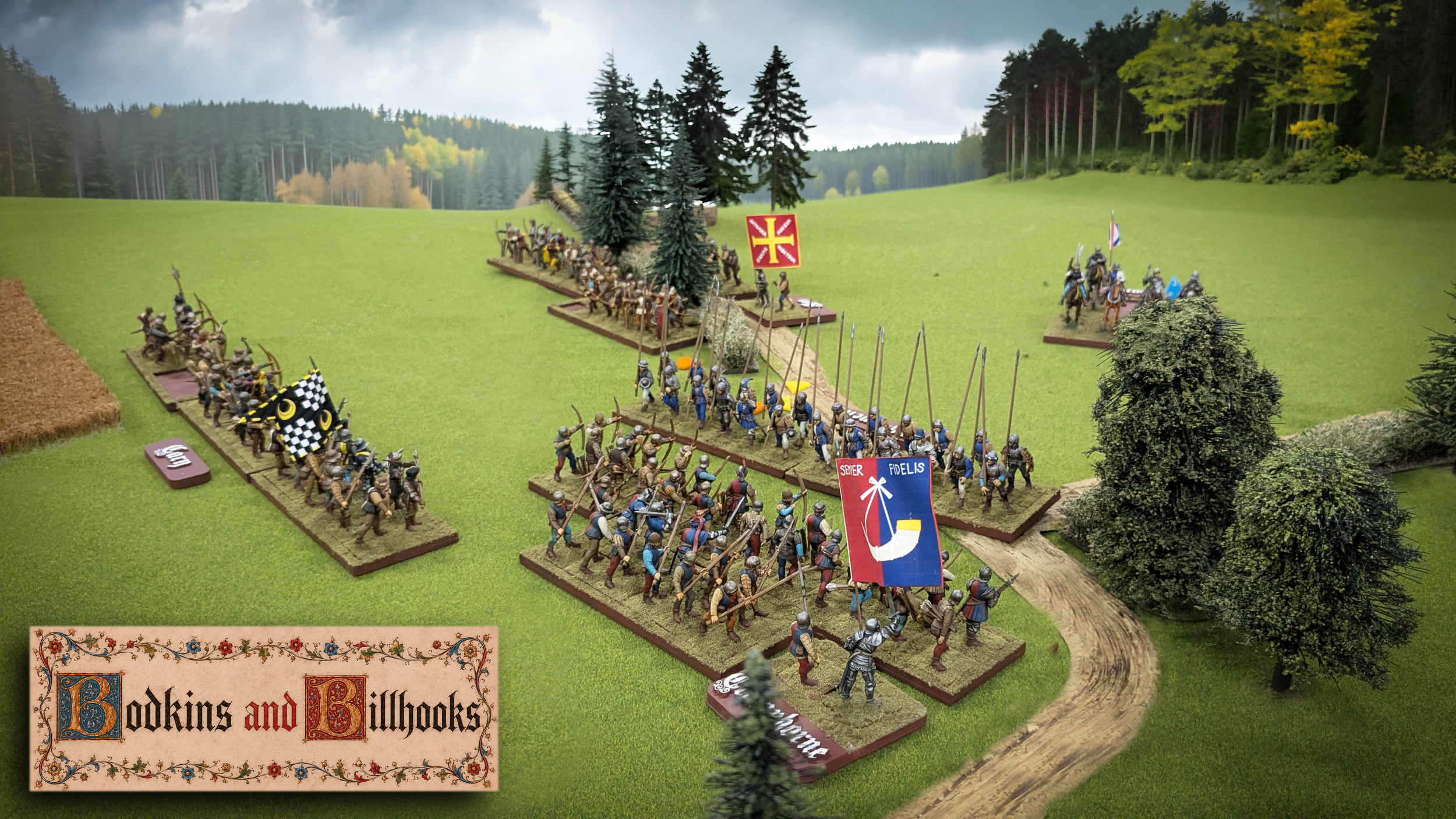
Can BattlegroundHD - a narrative skirmish ruleset focused on 20th century firefights and combined arms mechansied combat - be used for a medieval scrap? Can a game filled with Motostrelki and Abrams tanks be filled instead with Retinue Arhcers and Men-at-Arms? I needed a (short) break from the Cold War this week so it’s time to ignore Dr Malcolm’s warning, get my Never Mind the Billhooks armies on the table and find out.
I’ve been messing around with the idea of Bodkins & Billhooks for a while. I was initially planning on adapting BattlegroundHD for some Sharp Practice style Napoleonic clashes but my French forces are currently wallowing in a WIP state on my paint desk so I’ve switched by focus to The Wars of the Roses, an era which I already have plenty of table-ready units for thanks to a big lockdown project to create two sizable forces for Andy Callan’s aforementioned and very fun Never Mind the Billhooks.
The mechanics of BattlegroundHD have been adjusted to allow for larger units, more charismatic personal leadership, and the VERY different weaponry being employed. But the heart of the game, the core mechanics for activation, actions, Battle Dice and even things like vehicle movement for cavalry are all still in there and create a game that still has tonnes of great narrative moments and tactical decision making.
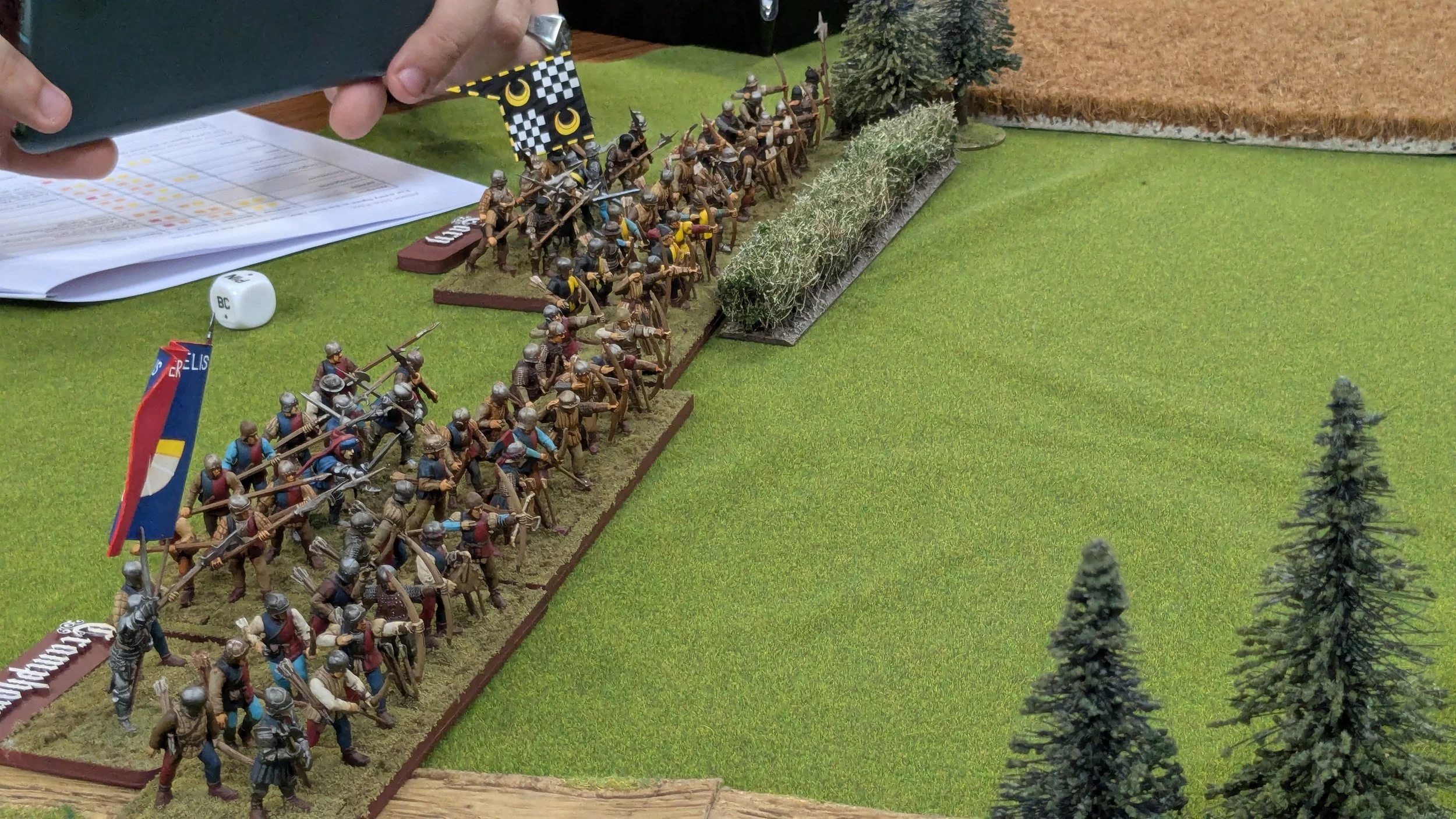
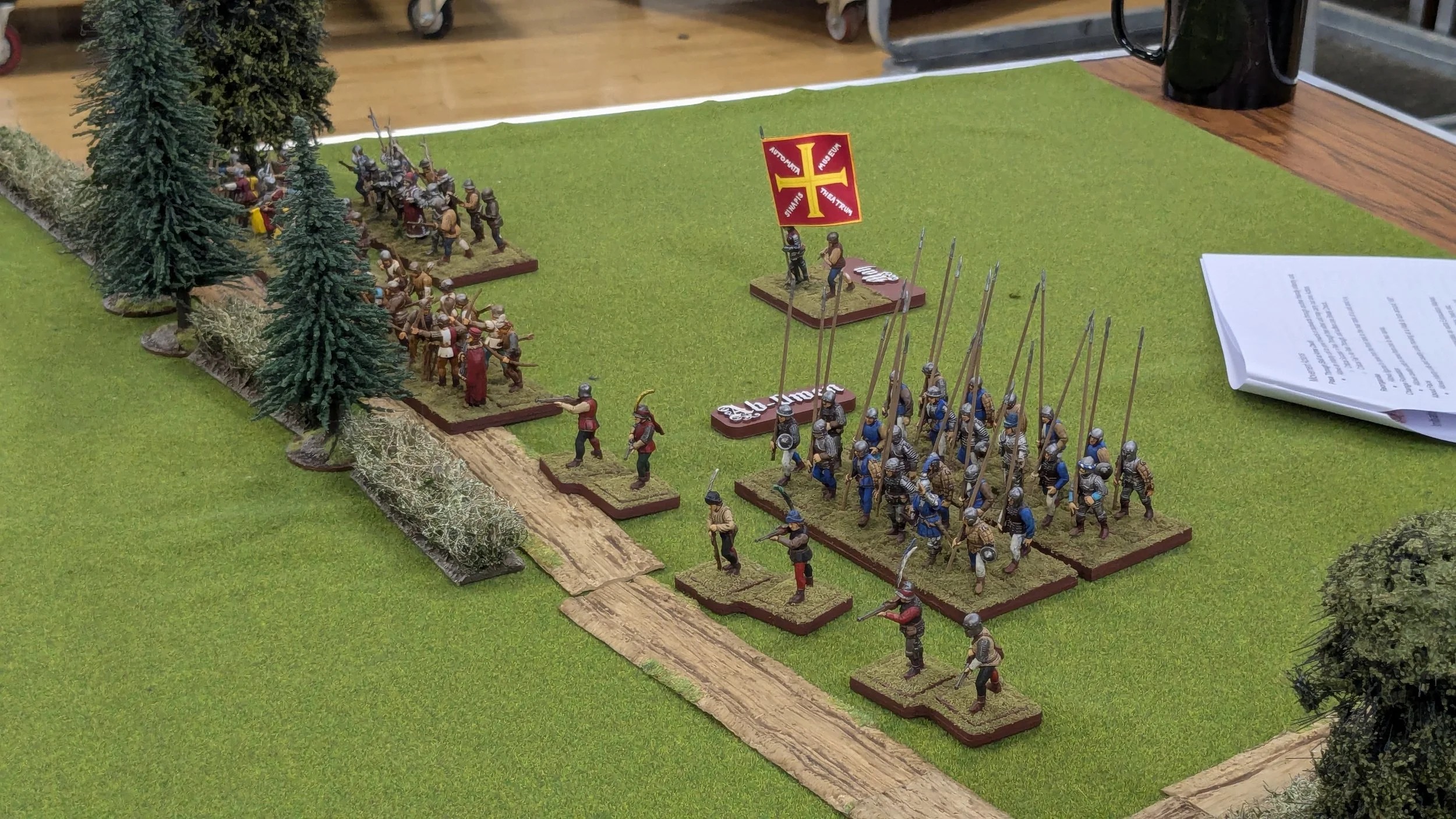
In last night’s first playtest at South London Warlords, John led the Lancastrian forces of Barons Cary and Cramphorne attempting to sweep aside the Yorkist army of the mad warrior-bishop of Norwich, Samuel May, backed up by continental mercenaries in the pay of Viscount Ab-Owen.
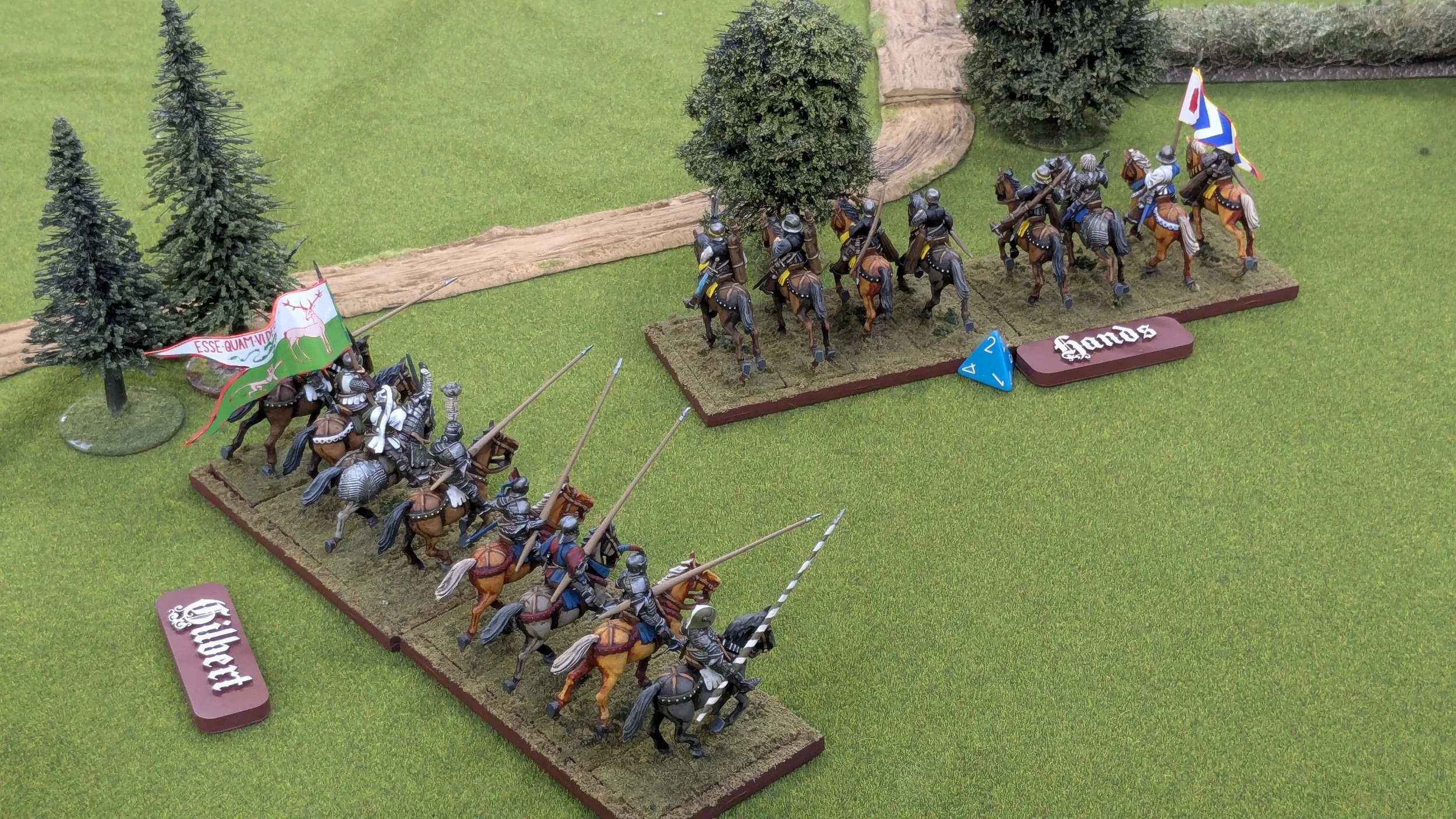
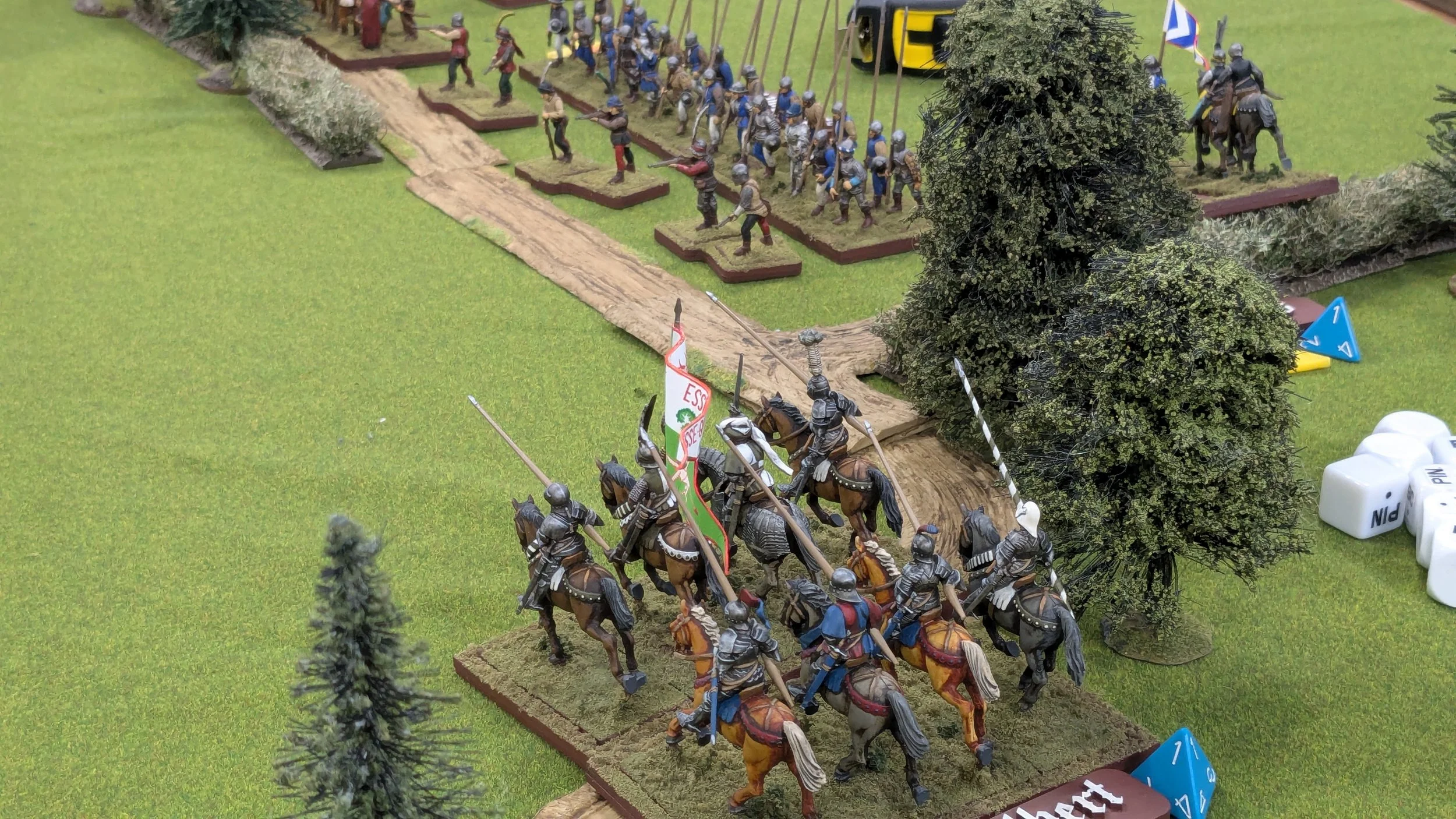
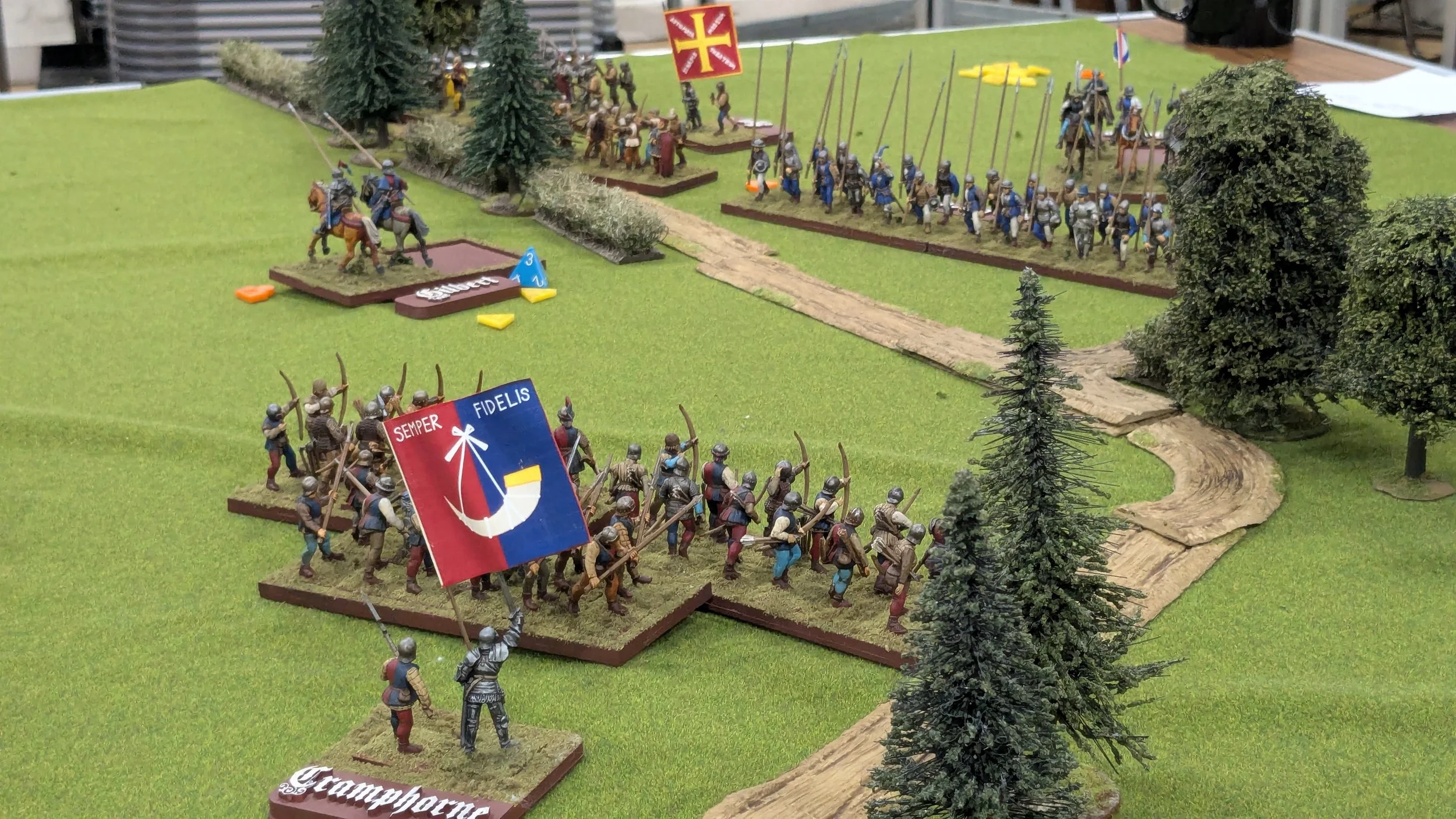
The Lancastrians began the game by moving up valiant Sir Gilbert and his mounted men-at-arms on the right flank. The Yorkists had their own cavalry force of much more lightly armed and armoured mounted archers on the same flank led by the noble (but apparently much less valiant) Sir Hands who sensibly decided that discretion is the better part of valour and turned tail and ran. Less sensibly, although with few other options, he decided to lead his men over a tall hedge which proved too great an obstacle for 3 of his men who fell from their horses and were left bruised and broken at the mercy of the Lancastrians.
Fuelled by the contempt any good English knight has for continental sell-swords, Gilbert spurred on - aiming to sweep away Ab-Owen’s handgonners and charge into the heart of the Yorkist line. However this glorious charge ended in tragedy. The mercenary skirmishers opened up at close range, their bullets tearing through the plate armour of Gilberts men-at-arms, fell back under the protection of their supporting pikemen and then reemerged to fire again on the Lancastrian horsemen as they swerved away, attempting to return back to their supporting infantry. The two men still in the saddle lost heart and fled.
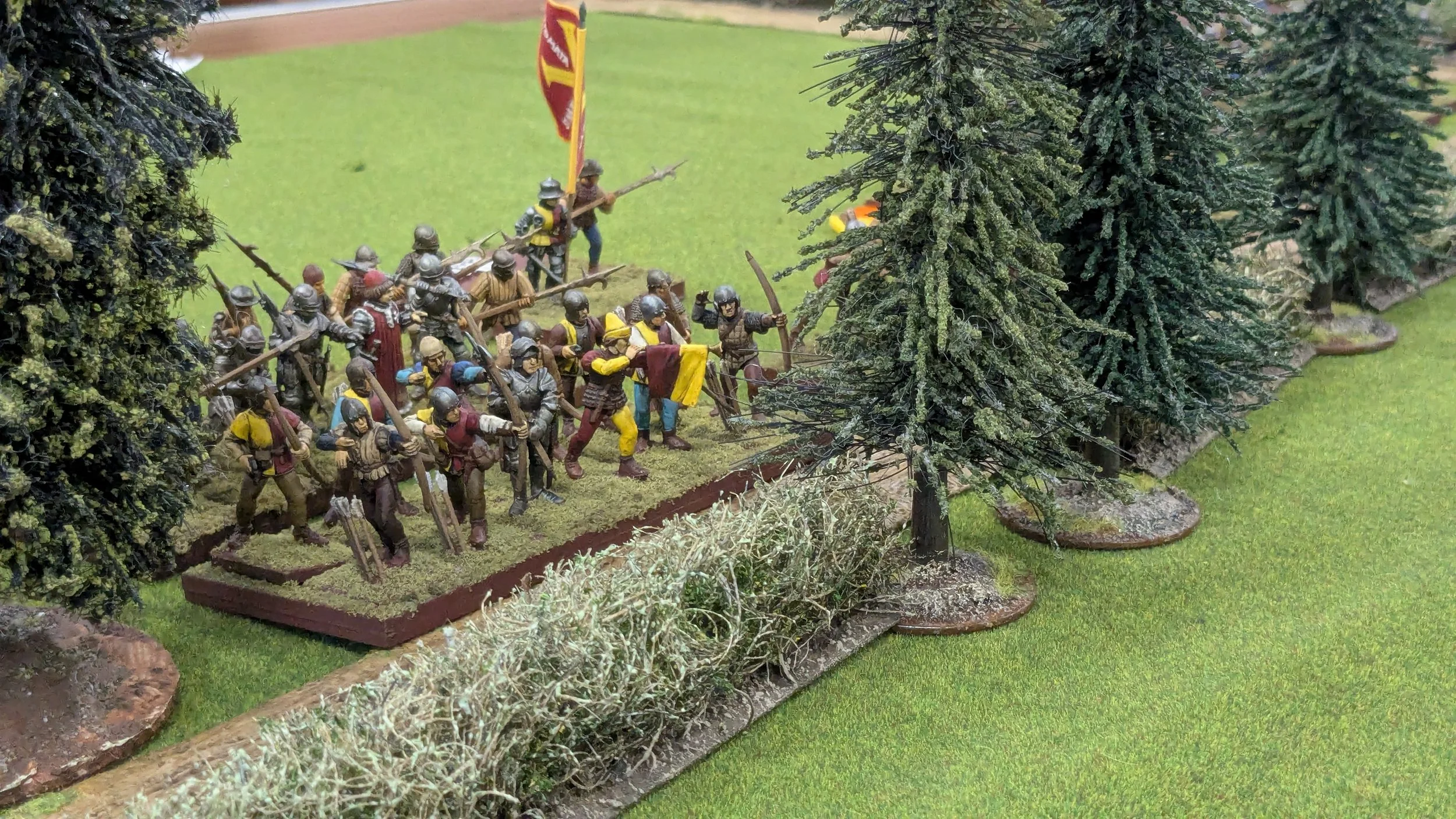
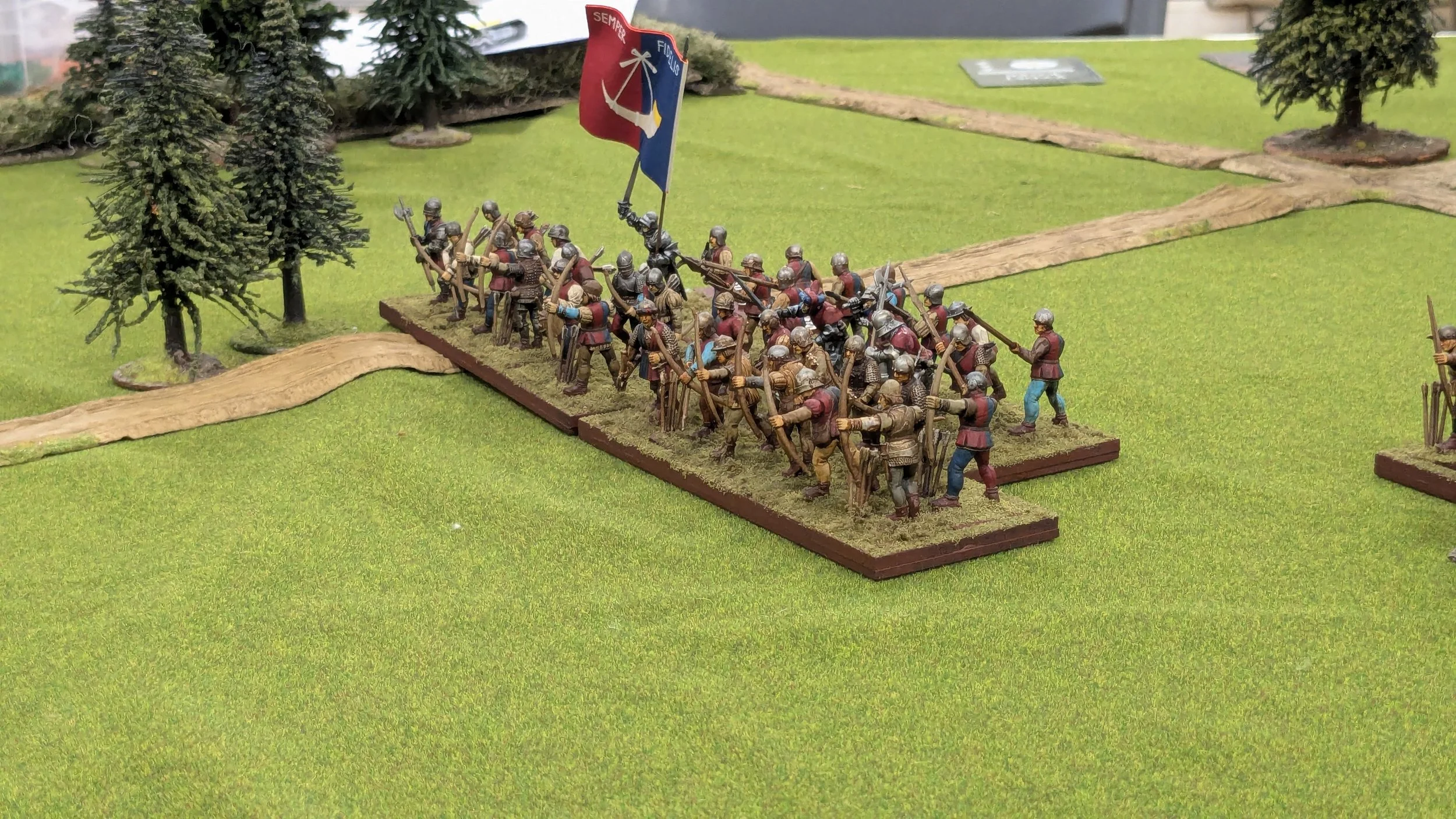
Meanwhile a fierce archery duel had been taking place. Bishop May’s levy archers had managed to force Baron Cary’s men to take cover and hide behind a hedge but Baron Cramphorn’s more experienced retinue were advancing up the field towards Ab-Owen. They loosed a volley into the mercenary handgonners, cutting their victory celebrations short, and left many of them reeling on the ground as the survivors ran away.
Viscount Ab-Own formed his pikemen into a line, wide enough to block Cramphorne’s advance and led his men forwards through a hail of Lancastrian arrows. To his flank the Cary and May levies also closed in on eachother as the two lines of infantry finally clashed.
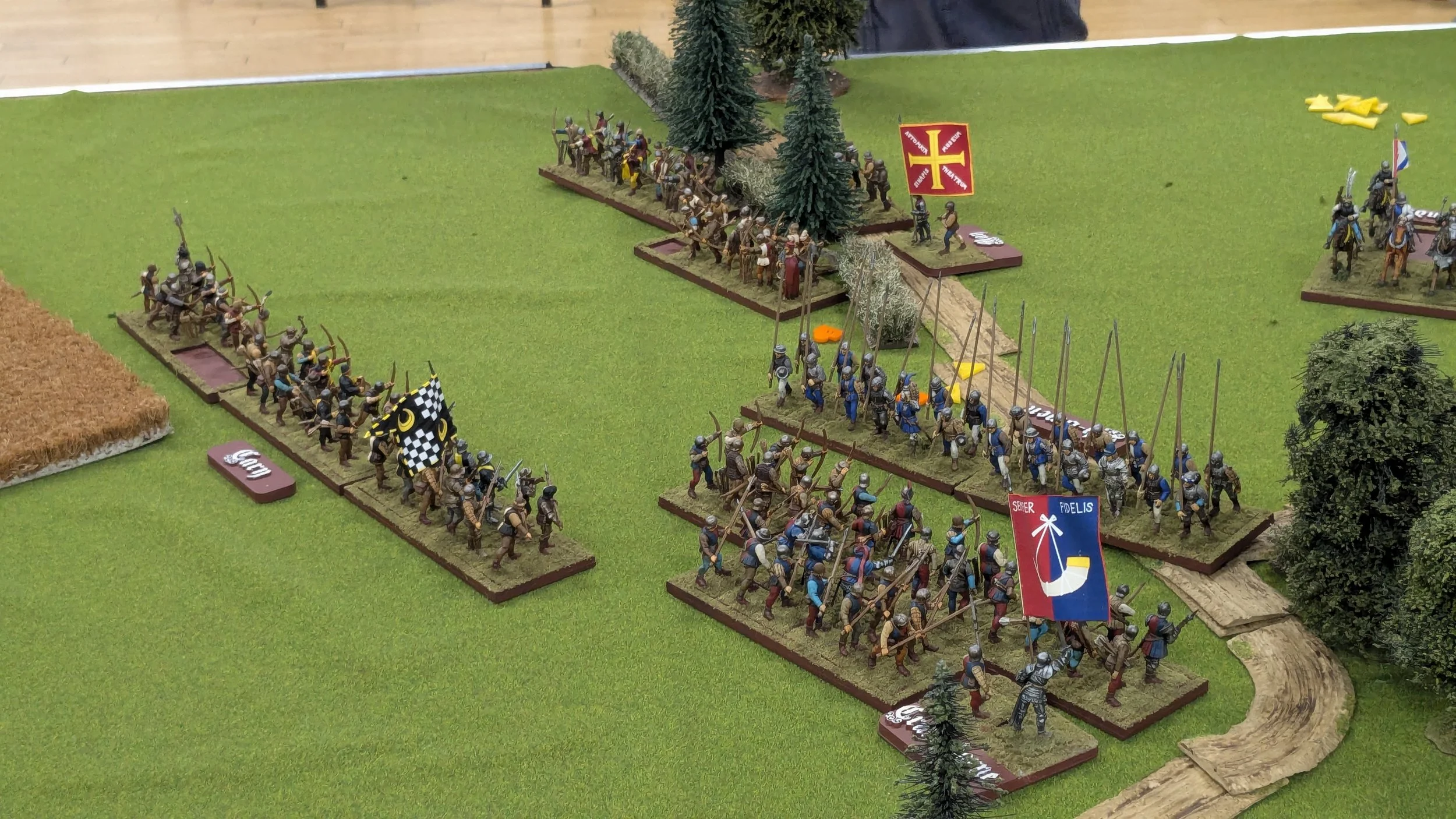
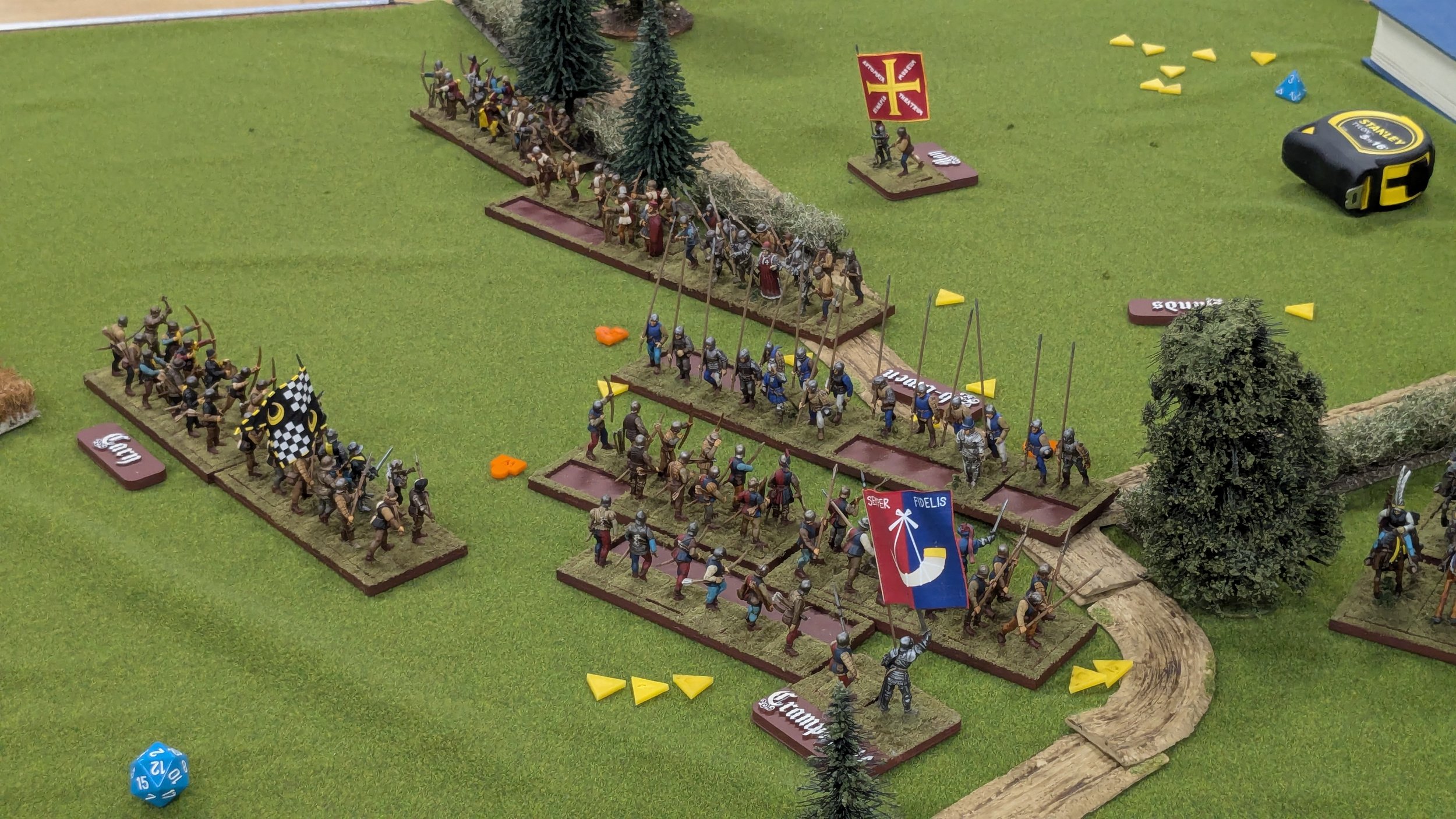
Cramphorne’s archers drew swords, maces and daggers as Ab-Owen’s pikemen pushed forwards. On the right of the Baron’s line his men were taking heavy losses so he pushed his billmen to the front of the line and pulled his archers back. These fresh, experienced troops forced their way past the pikes of the Yorkist mercenaries and started to inflict heavy casualties on them in return.
The Cramphorne men seemed to be gaining the upper hand but unfortunately we had to cut the game short at this point. On either flank the Baron’s position looked precarious. Cary’s men to his left were beginning to break and run, unwilling to withstand close range archery from Bishop May, and his right the Yorkist mounted archers had recrossed the hedge and were preparing to move around into his rear.
All in all a very decent first playtest for Bodkins and Billhooks. Far from perfect (we made a lot of revisions and tweaks on the fly mid-game) but lots to be pleased with and some clear changes to make for the next game.